

 Original Image
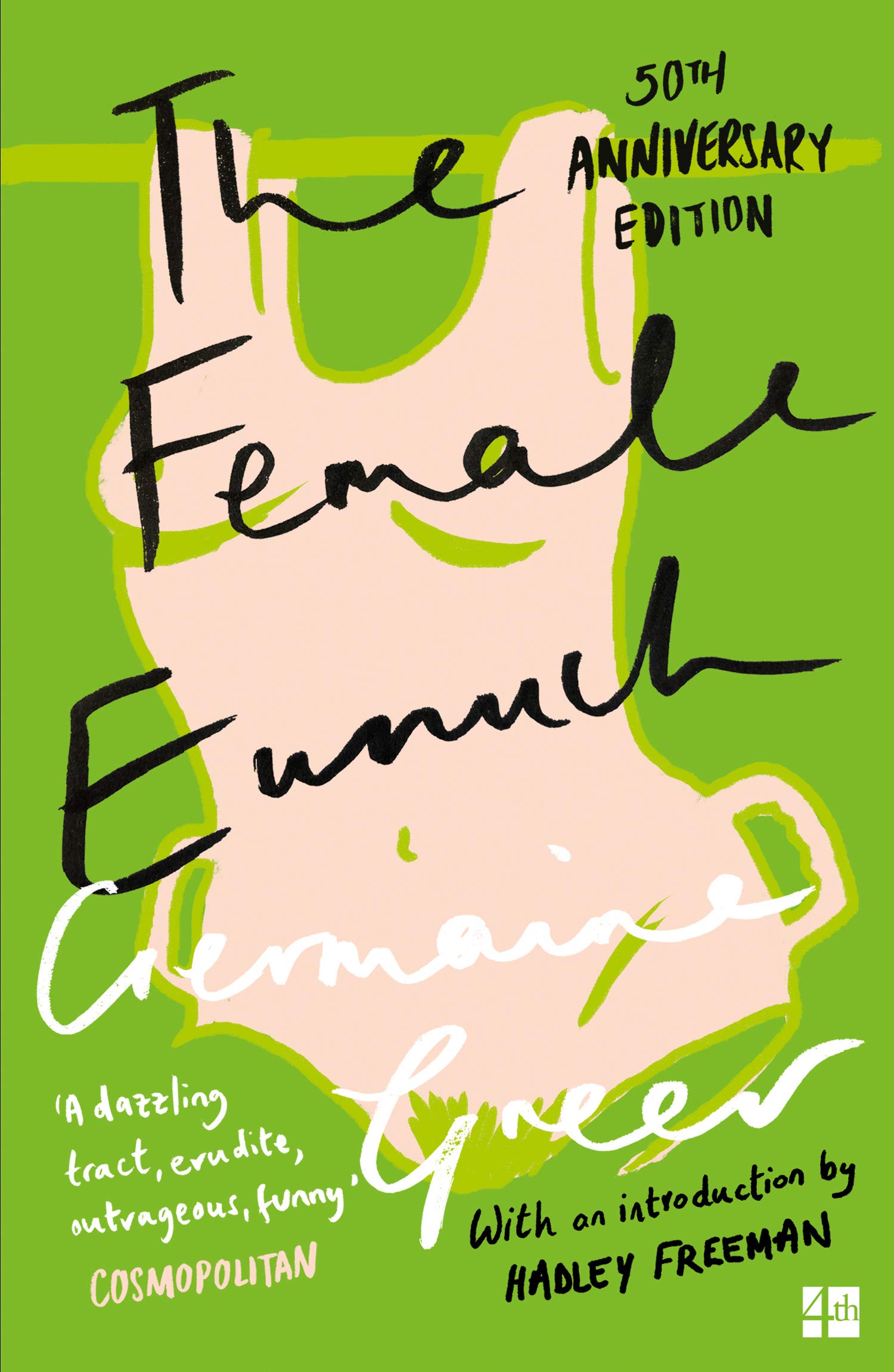
The Female Eunuch
Germaine Greer
Maybe I couldn’t make it. Maybe I don’t have a pretty smile, good teeth, nice tits, long legs, a cheeky arse, a sexy voice. Maybe I don’t know how to handle men and increase my market value, so that the rewards due to the feminine will accrue to me. Then again, maybe I’m sick of the masquerade. I’m sick of pretending eternal youth. I’m sick of belying my own intelligence, my own will, my own sex. I’m sick of peering at the world through false eyelashes, so everything I see is mixed with a shadow of bought hairs; I’m sick of weighting my head with a dead mane, unable to move my neck freely, terrified of rain, of wind, of dancing too vigorously in case I sweat into my lacquered curls. I’m sick of the Powder Room. I’m sick of pretending that some fatuous male’s self-important pronouncements are the objects of my undivided attention, I’m sick of going to films and plays when someone else wants to, and sick of having no opinions of my own about either. I’m sick of being a transvestite. I refuse to be a female impersonator. I am a woman, not a castrate.
Security is the denial of life
It takes a great deal of courage and independence to decide to design your own image instead of the one that society rewards, but it gets easier as you go along.
The clarion call to change that galvanized a generation. When Germaine Greer's The Female Eunuch was first published it created a shock wave of recognition in women, one that could be felt around the world. It went on to become an international bestseller, translated into more than twelve languages, and a landmark in the history of the women's movement. Positing that sexual liberation is the key to women's liberation, Greer looks at the inherent and unalterable biological differences between men and women as well as at the profound psychological differences that result from social conditioning. Drawing on history, literature, biology, and popular culture, Greer's searing examination of women's oppression is a vital, passionately argued social commentary that is both an important historical record of where we've been and a shockingly relevant treatise on what still remains to be achieved.
Original Image Share Link
Advertisement
More Interesting Books











Advertisement